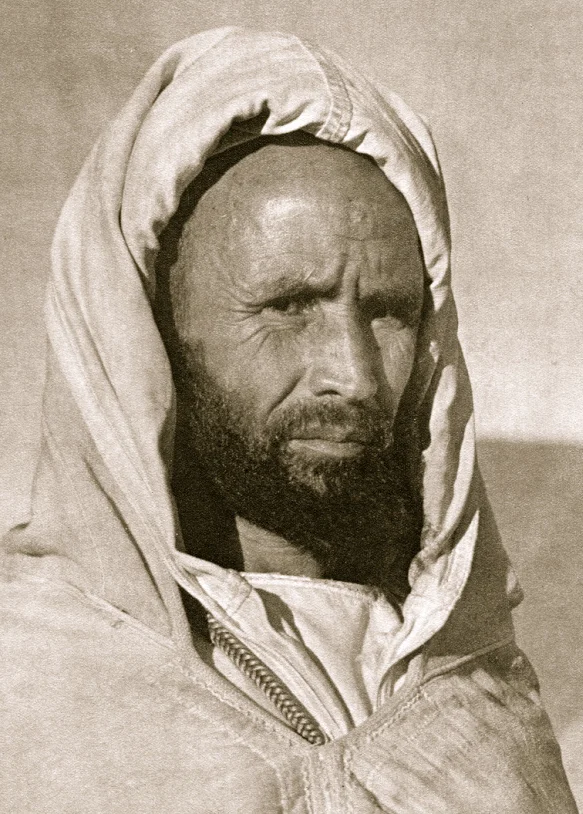
The Aït Ouahlim (Aït Wahlim in Hart, Ayt Wahlim in Di Tolla) form one of the five khoms of the confederation. Hart takes their example precisely to explain the election of the supreme chief: in the year when it was “the turn” of the Aït Wahlim, the members of the other four fifths chose the new amghar n-ufilla from among them (1984, p. 8). A tradition reported by L. Mezzine and taken up by A. M. Di Tolla makes the Aït Wahlim and the Aït Isful the founders of the collective granary of Igherm Amazdar, from which the confederation is said to have arisen (Di Tolla 2016, p. 181).
In 1930 Lieutenant Beaurpère, an officer of the Native Affairs service, divided the khoms of the “Aït Ouahlim” into two groupings. The Aït Zemro have four tribes: the Aït Bou Iknifen (sections Aït Brahim ou Youssef, Aït Ali ou Saïd, Aït Saïd ou Daoud, Aït Brahim ou Yakoub; habitat: Todgha, Msemrir, Imider), the Aït Aïssa ou Brahim (Ihalaliten, Aït Awi, Aït Khouia Ali; Todgha-Saghro, Tazarine-Taghbalt, Draa), the Ilemchan (Aït Bounou, Aït Maarir; Draa, Todgha-Tazarine) and the Ignaouen (Aït Ali, Aït Bou Tebratin, Aït Saïd, Aït Ichou, Aït Hassain; Todgha, Saghro). The Aït Hasso have the tribe of the Aït Kzad Ikhsan, whose sections live in the Tafilalet (Ouzligen, Ouchchen, Aït Izzo), on the southern slope of the Saghro (Aït Bou Daoud, Aït Ali ou Hasso, Aït Atto) and at Tazarine (Aït Kherdi). It is an administrative table, drawn up to prepare the occupation, which freezes a shifting organisation.
Spillmann adds that the Aït Atta often divided the Aït Ouahlim into three “thirds”, according to the affinities of their sections, the Aït Bou Iknifen with the Aït Aïssa ou Brahim, the Ilemchan with the Ignaouen, the Aït Hassou, and he counts them around 1930 at 2,200 households, the most populous of the five khmas (orig. pp. 74, 82).
Hart finds these two subgroups in the composition of the court of Igherm Amazdar: two judges from the Aït Zimru and two from the Aït Hassu, “the two sub-fifths” of the Aït Wahlim, sat with two judges from the Aït Yaʿzza (1984, p. 11). Together with the Aït Yaʿzza, the Aït Wahlim thus formed the “core” of the three clans settled at Igherm Amazdar.
Their territory, as Beaurpère describes it, is discontinuous. Most of the Aït Atta of the Todgha then belonged to the khoms of the Aït Wahlim (p. 205). The Imider, 140 hearths, was held by the Aït Bou Iknifen, who had taken it from the Aït Ounir (p. 259). In the Saghro the Ilemchan owned the storehouse-qasbas of Miqquebbi and Igherm n'Ilemchan, where only guardians lived while the others moved about on the southern slope; at Tiniourkan all Aït Atta tribes had representatives, “mostly Aït Wahlim who guard their storehouses” (p. 264). The winter pastures of the eastern Saghro received their flocks (p. 237).
The Aït Wahlim were not a political bloc. In the Imider, Beaurpère describes two rival sections of the Aït Bou Iknifen, the Aït Ali and the Aït Brahim, who concluded conditional truces and marked out around the qsar a security perimeter where any incident was heavily fined; the Aït Brahim stood behind Mohaddach, son of El Hajj Faska (“cheikh-el-ʿam of the Aït ʿAtta” in 1919), who had sided with the Glaoui only since 1919 (p. 259).
Assou Oubasslam was an Ilemchan (Hart 1984, p. 176), a tribe that Beaurpère's table places among the Aït Zemro; Spillmann counts him among the three notables of the Aït Ouahlim around 1930, with Mohaddach, his personal enemy, of the Aït Bou Iknifen, and Hammou ou Lahsen ben Merghi, of the Aït Bou Daoud, a former amghar n-ufilla (orig. pp. 83-84). The Bougafer was not, however, a war of the Aït Ouahlim alone: according to Spillmann, 300 households of the Aït Ouahlim living in the central Saghro were joined by 200 households of several tribes and by about a hundred Aït Yazza and Aït Ounebgui households (orig. pp. 140-141); Qaid ʿAli states that all clans were represented except the Aït Alouane (Hart, p. 180). Other Aït Ouahlim served in the auxiliary harkas: Ilemchan of the Dadès, Aït Hassou, Aït Aïssa ou Brahim (orig. p. 142). Beyond these estimates, the sources consulted do not allow the fighters of Bougafer or their losses to be identified section by section: the official telegram speaks of “all Aït Atta sections that remained in the Bou Gafer” (Saulay, p. 63).
Still to be documented: the Aït Wahlim's own traditions, their speech, family memory of Bougafer. None of the sources read for this page deals with them; the form “Aït Ouhalim” was not encountered there.
The memory of Bougafer also links Adjou Moh to the Ilemchan, “of the Aït Maarir of the Ilemchan tribe” according to the account published in 2016 by M. Oum Laïd; the 1930 table does list an Aït Maarir section among the Ilemchan. This link remains that of a reported oral tradition.
Assisted translation, not validated
⚠ The division into tribes and sections comes from a 1930 administrative table, drawn up from informants by a Native Affairs officer before the occupation: it does not say how the Aït Wahlim defined themselves nor how these groups have changed since.
⚠ Hart links the bearer of the war banner to the lineage of the Aït Bu Tghuratin, “of the Ilemchan clan”; Beaurpère places an “Aït Bou Tebratin” section among the Ignaouen. The two names are close, but nothing proves it is the same group.
Sources — 6 sources cited · 6 independent documentary line(s)
- Beaurpère (lieutenant), 1931 — p. 205, 237, 259, 264 ; tableau du khoms des Aït WahlimExcerpts consulted · Colonial military
- Oum Laïd, 2016Full text consulted · Moroccan press
- Spillmann et al., 2007 — trad. p. 61, 67-69, 112-114 (orig. p. 74, 82-84, 140-142)Excerpts consulted · Colonial military