Disputes were first settled locally, before assemblies of notables. Cases that found no resolution were brought before the istinaf of Igharm Amazdar: six judges, two from each of the three local clans, chosen for each case; if they disagreed, six more, then six more again; with eighteen votes split, the local chief decided.
Duclos, who conducted his inquiry in the Zagora district in 1952-1953, describes a little-studied institution: the tata. Every 'Attaoui had, in each group other than his own, a correspondent designated by fixed rules; his mere presence made any violence during a trial sacrilegious. The tata was “neither judge nor advocate”.
Duclos stresses that this old law has only “very distant connections” with the “Berber customary justice” instituted by the 1930 dahir: the Protectorate's customary courts do not simply continue Aït Atta institutions.
The customary code of the Aït Atta of the Rteb published by M'hamed Ahda, probably dating from the Protectorate, qualifies the role of Igherm Amazdar: these Aït Atta of the Ziz valley “never brought a case” before its court; they only consulted it “to establish the custom” on a specific case, through a messenger (rekkas) paid by the losing party, and had not done so for about a hundred and fifty years (2001, p. 101).
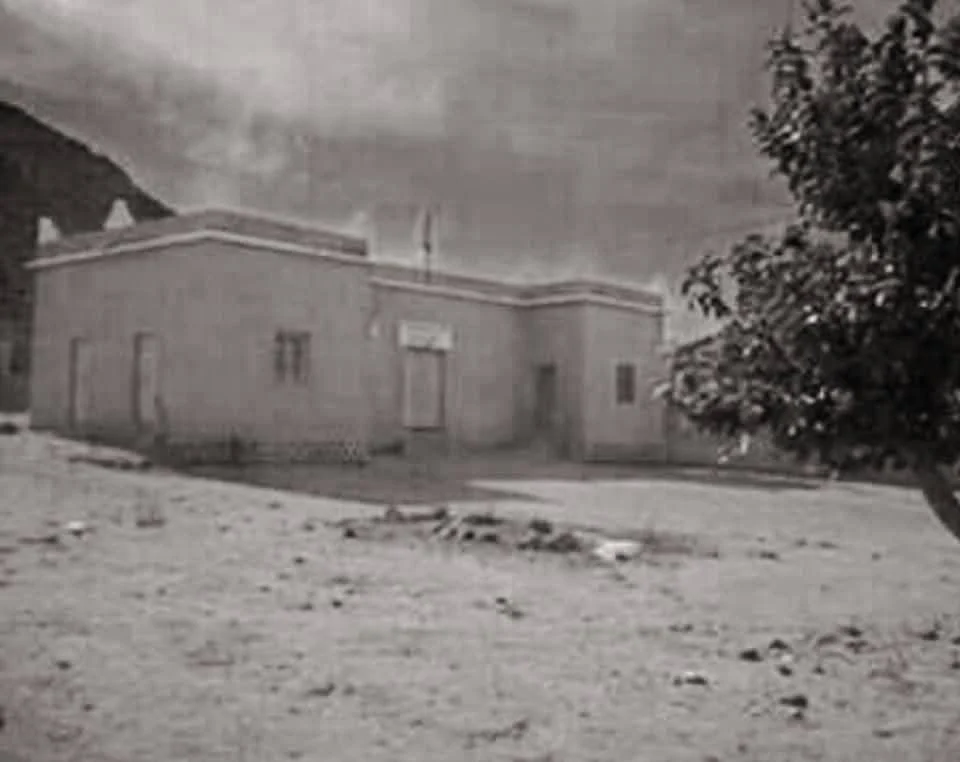
At village level, the same code describes a djemâa chaired by a sheikh chosen in turn from each section, approved by the whole tribe, drawn by lot in case of disagreement, elected for six months and bound to render accounts (p. 103): the rotation observed for the supreme chief thus reappears at the level of the ksar. Under the Protectorate these Aït Atta appealed to the customary court of Ksar es-Souk (p. 101), and Hart reports that a building was erected in 1938 for the istinaf of Igherm Amazdar, where Assou Oubasslam became a kind of dean (1984, p. 11).
Assisted translation, not validated
⚠ Duclos reconstructs the procedure using a “fictitious concrete case”: his description is a model, not the record of a real trial.
⚠ A recent description (Stitou 2023, pp. 5-8) attributes to the “supreme court” of Igherm Amazdar six permanent bodies, a president elected for one non-renewable year and three levels of procedure; it cites no source and is not adopted here as established.
Sources — 4 sources cited · 4 independent documentary line(s)